
Contact us for a Free Quote today
Get your FREE
Quote Today

WHY CHOOSE US
WHY REMOVE
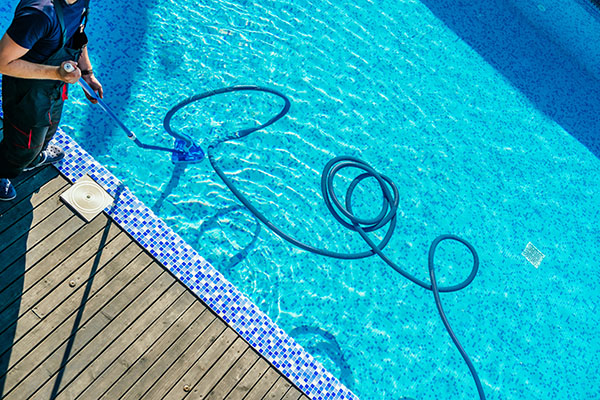
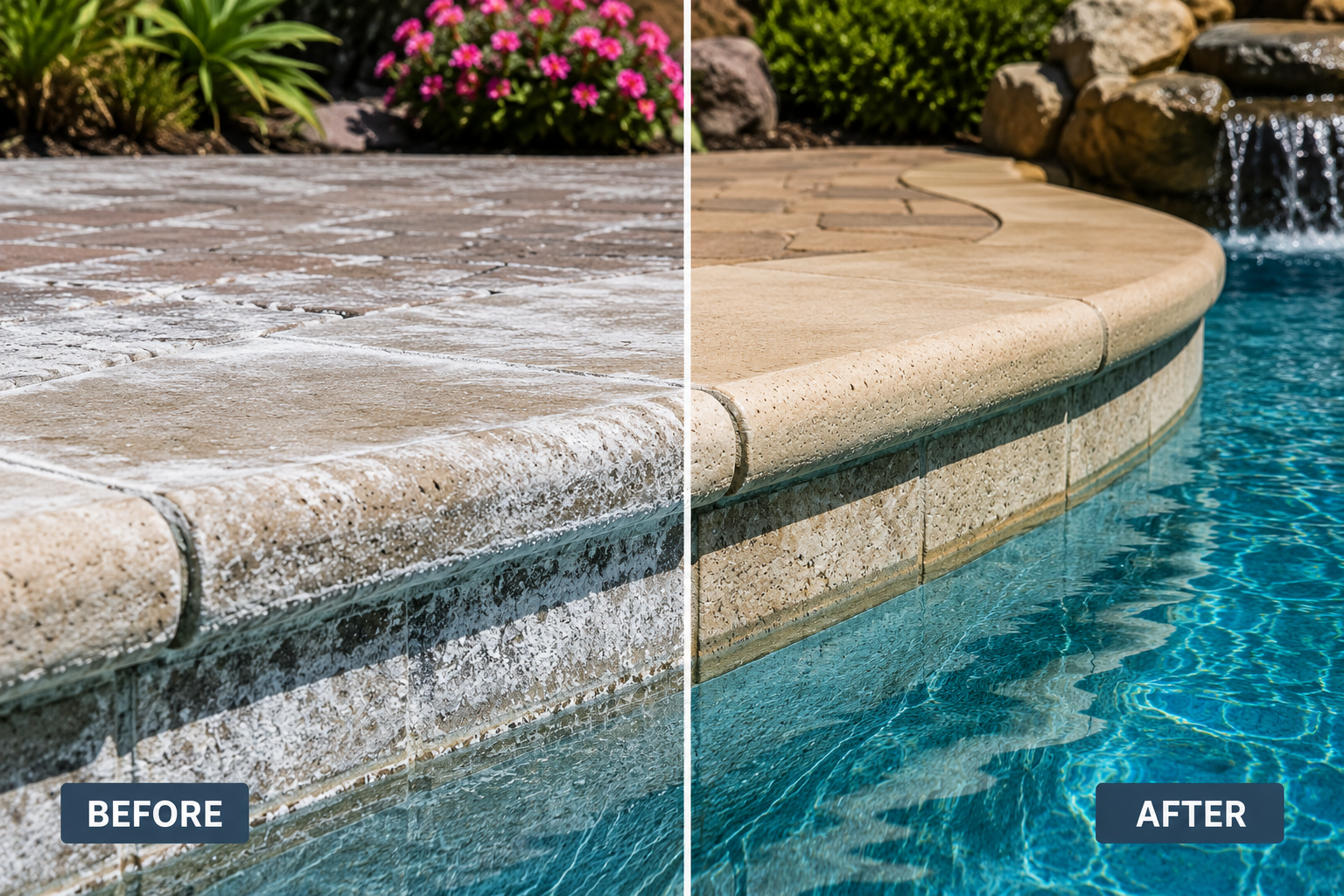
Two types of calcium deposits are identified in the client workscope, and understanding the difference helps determine how the affected surface should be treated.
Our Calcium Removal Process
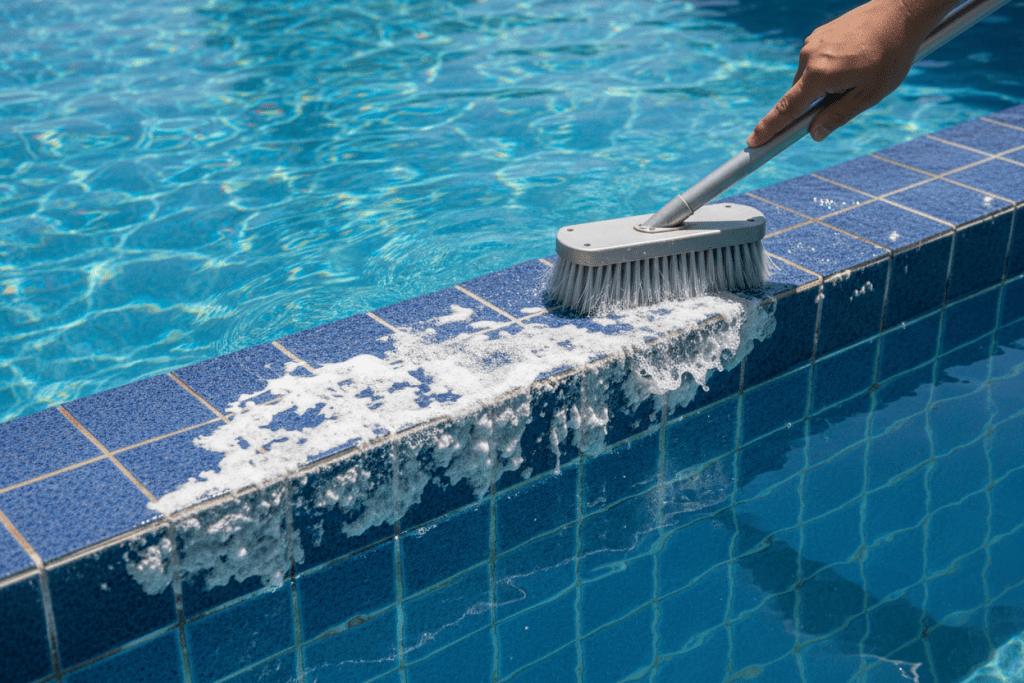
Granite Bay Pool Care & Power Washing evaluates each pool before recommending a treatment method. The process outlined for the service includes five stages.
The affected areas are evaluated to determine the severity of the buildup, the apparent type of calcium deposit, and the condition of tile, plaster, coping, or other surfaces involved.
Calcium hardness, pH, and total alkalinity are checked to better understand the pool conditions that may be contributing to mineral accumulation.
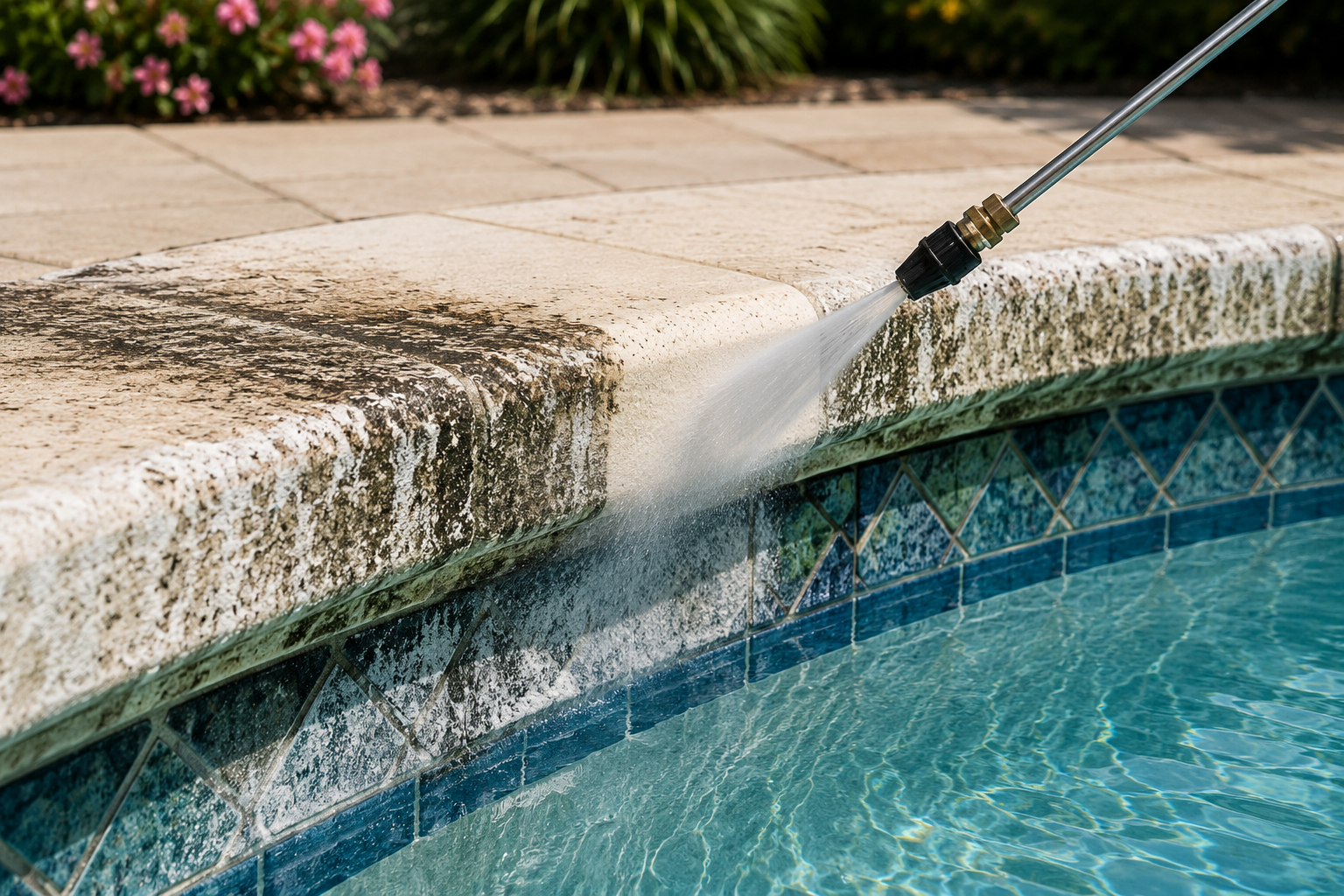
Depending on the deposit and its severity, treatment may involve pumice stone hand cleaning for lighter buildup, a professional-grade descaling solution for moderate deposits, or bead blasting for heavy or hardened calcium silicate.
After treatment, the cleaned areas are thoroughly rinsed and inspected so the condition of the treated surfaces can be reviewed.
The process concludes by addressing pool chemistry to help slow rapid mineral re-accumulation, including attention to calcium hardness, pH, and total alkalinity.
Surfaces We Treat
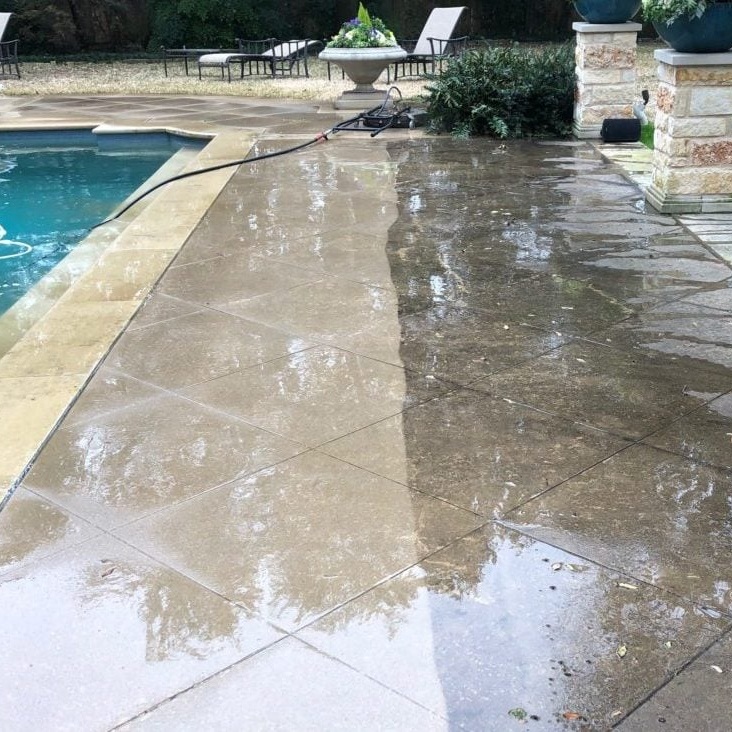
Calcium and mineral buildup can develop wherever pool water repeatedly contacts or evaporates from a surface. Granite Bay Pool Care & Power Washing can treat several pool and pool-adjacent areas identified in the service workscope.
How Often Should You Have Calcium Removed?
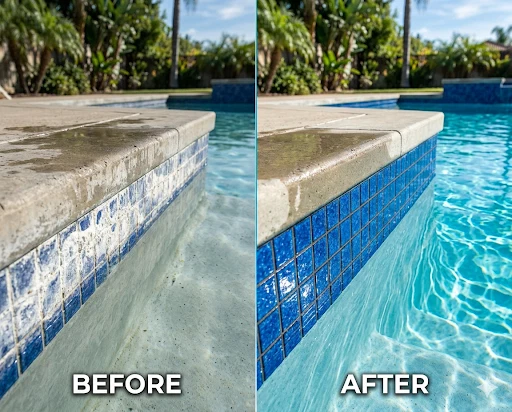
The client workscope recommends professional calcium removal approximately once per year for most Placer County pools, commonly in spring before peak swimming season. It also notes that pools with heavier use, frequently operated water features, or consistently elevated calcium hardness may require more frequent attention.
Rather than relying only on a calendar, pool owners can also watch for visible signs that mineral deposits are developing.
These can include:
Addressing buildup before it becomes heavily embedded can also make the treatment process more straightforward.
WHY IT MATTERS
GOT QUESTIONS?
Get answers to common questions about exterior cleaning, surface care, and what to expect from power washing services in Granite Bay, CA.
Light calcium carbonate may sometimes respond to careful hand cleaning, but incorrect techniques can scratch tile or affect grout. Harder deposits such as calcium silicate can require professional treatment. Granite Bay Pool Care & Power Washing evaluates the buildup and affected surface before determining an appropriate calcium removal method.
The client workscope states that most residential pool calcium-removal projects take approximately two to four hours, depending on buildup severity and the surfaces involved. Granite Bay Pool Care & Power Washing assesses the pool first so the required treatment and expected service time can be based on the actual condition present.
Calcium can accumulate again because pool water continues to contain dissolved minerals, while evaporation and water chemistry influence how those minerals deposit on surfaces. Granite Bay Pool Care & Power Washing evaluates calcium hardness, pH, and total alkalinity during the service to address conditions associated with recurring buildup.
Yes. Calcium buildup can occur on more than the main waterline tile. Granite Bay Pool Care & Power Washing can evaluate spillways, raised spa walls, fountains, grotto rock surfaces, coping, and other affected areas when providing pool tile calcium cleaning for Roseville, CA properties.
Yes. The supplied service workscope identifies Granite Bay, Roseville, Rocklin, Lincoln, Auburn, Loomis, El Dorado Hills, Folsom, and the greater Sacramento area as service locations. Property owners can contact Granite Bay Pool Care & Power Washing at (916) 365-2849 to confirm availability for a specific address.