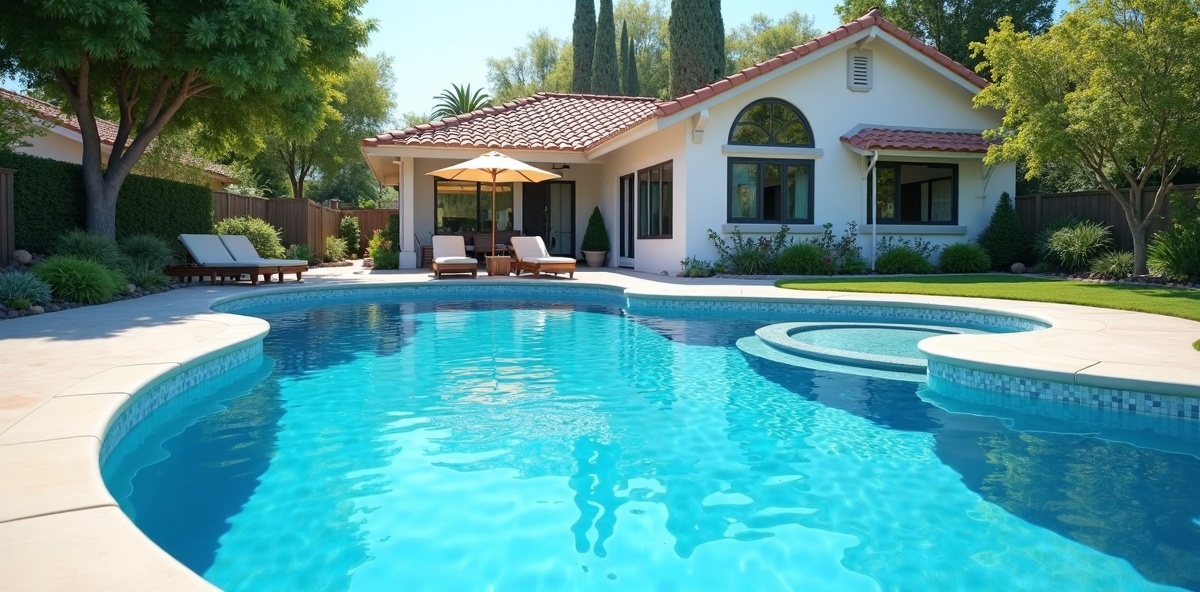
If you've noticed green, black, or slimy patches forming on your pool deck, you're dealing with algae — and it's one of the most common complaints we hear from homeowners in Granite Bay, Rocklin, and Roseville. Beyond looking terrible, algae-covered pool decks are genuinely dangerous. Wet algae is extremely slippery, and a fall on concrete or pavers can cause serious injury. Here's how to deal with it properly.
Why Algae Grows on Pool Decks
Pool decks are the perfect environment for algae. They're constantly wet, exposed to sunlight, and often shaded in spots. In Granite Bay's warm climate, algae can establish itself in as little as 2–3 weeks during summer. The most common types you'll see:
- Green algae — the most common, forms a slippery film on concrete and pavers
- Black algae — appears as dark spots, roots deeply into porous surfaces
- Pink/red algae — actually a bacteria, common in shaded areas near water
- Yellow/mustard algae — powdery appearance, often in corners and shaded spots
DIY Algae Removal: What Works and What Doesn't
There are a few DIY approaches that can work for light algae growth. Here's an honest breakdown:
| Bleach + water (1:10 ratio) | Works for light surface algae. Apply, scrub, rinse. Repeat if needed. |
| White vinegar | Mild effectiveness only. Good for early-stage growth on pavers. |
| Baking soda paste | Very mild. Only for small spots on non-porous surfaces. |
| Commercial algae remover | Effective but can discolor some pavers. Test first. |
| Garden hose | Not effective — just spreads spores to new areas. |
Pro Tip: Warning: Never use bleach on travertine, natural stone, or colored pavers without testing first. Bleach can permanently discolor or etch these surfaces.
Professional Power Washing: The Most Effective Solution
For established algae growth — especially black algae or large affected areas — professional power washing combined with a pre-treatment solution is the most effective approach. Here's what the professional process looks like:
- Pre-treatment: Apply a biodegradable algaecide solution and let it dwell for 10–15 minutes
- Agitation: Scrub the surface to break up algae colonies
- Hot water pressure washing at 2,000–2,500 PSI (concrete) or 1,200–1,500 PSI (pavers)
- Post-treatment rinse to remove all chemical residue
- Optional: Apply a penetrating sealer to prevent future algae growth
Preventing Algae from Coming Back
Removing algae is only half the battle. Here's how to keep your pool deck clean all season:
- Apply a concrete or paver sealer after cleaning — it closes pores that algae colonize
- Improve drainage around the deck so water doesn't pool in shaded areas
- Trim overhanging trees and shrubs to increase sunlight exposure
- Rinse the deck with a hose after heavy use to remove organic material
- Schedule annual professional cleaning before swim season opens
Ready to get professional help with this?
Book a Pool Deck CleaningTags